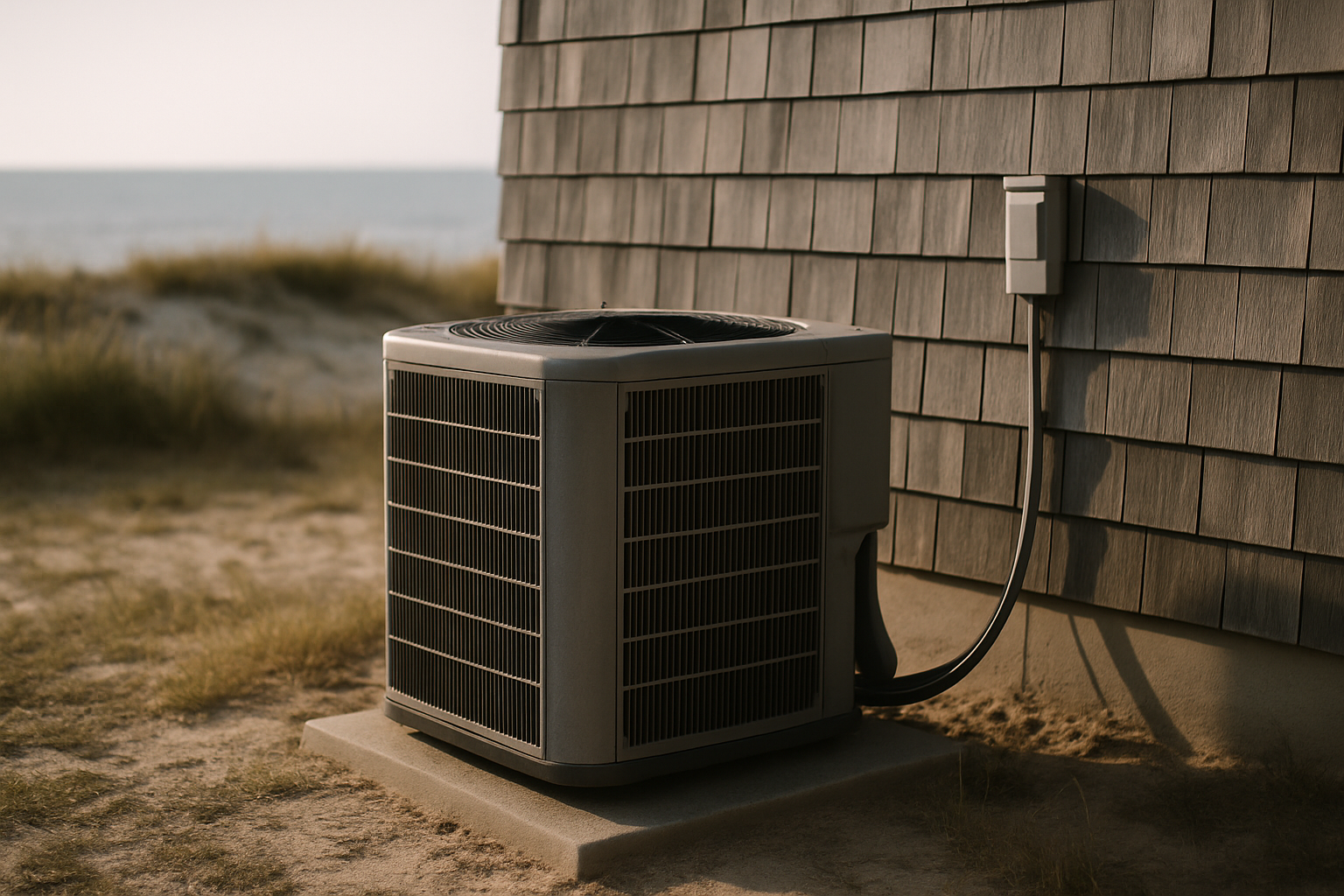
Coastal HVAC in Atlantic County: Salt Air, Flood Elevation, and Seasonal-Use Design
Coastal HVAC in Atlantic County is decided by three forces before comfort is even discussed: salt air that corrodes outdoor coils and electrical contacts, flood elevation rules that set where equipment may sit, and seasonal vacancy that leaves sealed houses unmonitored. Specify corrosion-resistant coils, elevate outdoor units to code, control humidity, and monitor remotely — and the system lasts years longer.
Coastal HVAC in Atlantic County is decided by three forces before comfort is even discussed: salt air that corrodes outdoor coils and electrical contacts, flood elevation rules that set where equipment may sit, and seasonal vacancy that leaves sealed houses unmonitored. Specify corrosion-resistant coils, elevate outdoor units to code, control humidity, and monitor remotely — and the system lasts years longer.
This guide is for owners of homes in Atlantic City, Ventnor City, Margate City, Longport, and Brigantine, and for bayfront and back-bay homes within a mile or two of the water elsewhere in the county. Coastal HVAC is not a separate product category. It is the same equipment, chosen, placed, and maintained against three constraints that inland homes never face.
The three constraints that define coastal HVAC
Comfort is the easy part. An inland home in Hammonton or Mays Landing mostly needs correctly sized equipment, a clean filter, and annual service. A shore home needs all of that plus a plan for what the environment does to the equipment. Ocean air moderates the extremes — a Ventnor home rarely sees the sharpest inland cold or the most oppressive inland heat — but it carries a constant load of salt that mainland towns never deal with.
That load, the water, and the empty-house months work in sequence. Salt air attacks the outdoor unit first, eating at coils, terminals, and cabinets. Flood elevation rules decide where the equipment may sit before the first wire is pulled. Seasonal vacancy asks the system to protect a sealed house for weeks or months at a time. This is barrier island HVAC in practice: the same heating and cooling physics, with salt, water, and vacancy added to the specification.
| Setting | Salt exposure | What most often fails | What changes in specification and care |
|---|---|---|---|
| Inland towns (Hammonton, Mays Landing, Egg Harbor City) | Low | Normal age-related wear | Standard equipment, routine annual service |
| Bayfront and back-bay homes within a mile or two of the water | Moderate to high | Coil pitting, electrical terminals, contactor points | Coastal-rated coil, more frequent fresh-water rinses |
| Barrier island ocean block (Atlantic City, Ventnor, Margate, Longport, Brigantine) | High year-round | Coils, cabinets, fasteners, electrical contacts; flood exposure after storms | Coated coil, treated cabinet, elevated placement, freeze and remote monitoring |
How salt air shortens condenser and coil life
Salt damage is not a cosmetic problem. Airborne salt settles on the aluminum fins and copper tubing of the condenser coil. In the presence of moisture — and coastal humidity keeps those surfaces damp for much of the year — the salt becomes actively corrosive. Over time, salt attack pits the fins, degrades the coil's ability to reject heat, and eats at electrical terminals, contactor points, and fan motor housings.
A condenser coil's job is to move heat from inside the house to the outside air. Pitted fins and corroded tubing make that heat transfer worse. The system loses capacity, runs longer to reach the same setpoint, and forces the compressor to work harder for the same result. Meanwhile, corrosion at the contactor points and terminals creates the intermittent electrical failures that show up as a system that runs one day and will not start the next.
Electrical corrosion often shows up before the coil fails outright. Terminals and contactor points are small, exposed, and carrying current; salt accelerates oxidation at those connection points. A homeowner may never notice the slow loss of coil capacity, but a no-start call on a hot Saturday is usually the electrical side of salt damage announcing itself.
The lifespan difference is measurable. It is common for a condenser two blocks from the beach to age twice as fast as the identical unit ten miles inland in Egg Harbor Township. A coastal condenser that never gets rinsed or inspected can lose capacity and years of service life compared with an identical unit inland. That gap is not caused by bad installation or a weak brand. It is caused by salt, and it is addressable with the right specification, a consistent rinse schedule, and a coastal AC replacement plan when the equipment has reached its limit.
Materials and coatings that resist salt air HVAC corrosion
Barrier island installations get an extra layer of engineering. Salt aerosol in Brigantine, Atlantic City, Ventnor, Margate, and Longport corrodes outdoor coils and cabinets, so island heat pumps should be specified with corrosion-resistant or coated coils and treated cabinets — coastal-rated options built to resist salt-air corrosion. This is the single most important equipment decision for a shore house, and it is made at the quote stage, not in the field.
A coated coil seals the aluminum fins and copper tubing against direct salt contact. It does not make the unit maintenance-free, but it slows the pitting that destroys heat transfer. A treated cabinet protects the sheet metal, fasteners, and seams that hold the outdoor unit together. In Longport, where salt-laden air moves off the ocean on one side and the bay on the other, cabinet panels and fasteners corrode far faster than anything an inland system endures.
| Feature | What it protects | Why it matters at the shore |
|---|---|---|
| Corrosion-resistant or coated coil | Aluminum fins and copper tubing | Slows pitting and preserves heat rejection |
| Treated cabinet | Panels, seams, and outer surfaces | Prevents cabinet failure and keeps the unit weather-tight |
| Corrosion-resistant fasteners and protected electrical connections | Screws, terminals, contactors | Reduces intermittent electrical failures in salt air |
The same logic applies across equipment lines: the model and its coastal options matter more than the badge. Ask the contractor which coastal package the manufacturer offers and what it covers before the quote is finalized.
Placement and coastal HVAC maintenance that extend equipment life
Specification only does half the job. Placement does real work too. Siting the outdoor unit with some shelter from direct spray — without boxing it in so airflow is blocked — keeps the worst of the salt off the coil. Code-required clearances still apply, and they exist for airflow and service access as well as safety.
Then comes the routine that actually extends life: periodic fresh-water coil rinses through a maintenance plan. Rinsing removes the salt before it concentrates and turns actively corrosive. A coastal condenser that never gets rinsed or inspected loses capacity and years of service life compared with an identical inland unit. At the shore, seasonal maintenance with coil cleaning is not an upsell; it is the difference between a unit that reaches its expected life and one that dies early.
A coastal maintenance checklist should include:
- Rinse the condenser coil with fresh water on a schedule matched to salt exposure.
- Inspect electrical terminals, contactor points, and the fan motor housing for corrosion.
- Check cabinet panels and fasteners, and replace corroded parts before they fail.
- Verify clearances and drainage so the unit is not sitting in standing water or blocked airflow.
- Confirm the disconnect is clean and operable before the season starts.
Choose a licensed and insured New Jersey contractor whose technicians are NATE- and EPA-certified, and who provides free replacement estimates with New Jersey permits pulled and inspections managed. Coastal maintenance is a recurring commitment, and it should be priced and scheduled like one.
HVAC flood elevation NJ: where outdoor equipment may sit
Flood elevation is a placement rule, and it is set before comfort is considered. For outdoor equipment in a flood-prone area, the governing documents are FEMA's flood maps and the municipality's flood damage prevention ordinance. Together they set a design flood elevation for the zone and block, and that elevation determines how high the condensing unit, heat pump, and electrical disconnect must sit.
The practical result at the shore is that outdoor equipment is raised on platforms or stands rather than set at grade, and the electrical disconnect is kept above the required flood level so the system can be safely isolated after a storm. The exact height is not a guess. It comes from the zone designation and the ordinance, and it is confirmed through the permit and inspection. A contractor that pulls New Jersey permits and manages inspections will confirm the number for your property before equipment is ordered.
Barrier island homes add a placement variable that inland homes do not: equipment may live on a rooftop, a deck, or a platform squeezed between the house and a narrow side yard. Each location has to satisfy the elevation requirement, the clearance requirement, and safe access for service — at night, in August, when beach-block parking is gone.
Flood water is not just water. Storm surge carries salt, sand, and debris into equipment. After a flood or surge event, the rule is simple: do not restart the equipment until it has been inspected. Salt water is conductive and corrosive, and surge-damaged equipment can be unsafe to re-energize. Post-storm inspection of flooded or surge-damaged equipment is a standard part of shore HVAC work, not an afterthought.
Nor'easters add a second risk: power flickers and interruptions. A furnace or heat pump that depends on steady power needs to survive the interruption and come back cleanly, which is another reason the electrical side of the system — disconnect, contactor, and wiring — deserves the same coastal scrutiny as the coil.
Shore house air conditioning: dehumidification for sealed-up seasonal homes
A seasonal shore house has a moisture problem that a mainland house does not. From late May through September, outdoor dew points along the shore sit high enough that any air leaking into the house carries a heavy moisture load. Indoors, that moisture condenses on cool surfaces — AC supply ducts, crawlspace framing, basement walls, the back of closets on exterior walls — and sustained surface moisture is all mold needs.
The numbers are the same for every house in the county: once indoor relative humidity spends time above 60 percent, mold and dust mites flourish. The comfortable, healthy target zone is roughly 40 to 50 percent in summer. A sealed-up seasonal home can drift above that target quickly if the system is simply turned off or left at a high setback.
The fix is to run the house in dehumidify mode, not off. A whole-house dehumidifier removes moisture without overcooling the space, and a variable-speed system or a heat pump with a dehumidify setting can hold the target while using less energy than a short-cycling air conditioner. Ventilation matters too: filtration, ventilation, and humidity control work together in damp island air, especially in a house that has been closed for weeks.
A plain air conditioner only dehumidifies while it is cooling. On a mild, humid shoulder-season day, it may not run long enough to remove moisture even though the house feels damp. A whole-house dehumidifier or a system with a dedicated dehumidify mode separates moisture removal from cooling, which is exactly what a sealed seasonal home needs.
Sizing matters here. The dehumidifier capacity and the system's ability to remove latent moisture depend on house size, air leakage, and occupancy, and they should be confirmed with a Manual J load calculation rather than matched to a rule of thumb. A house on a barrier island, sealed and unoccupied for weeks, is a different moisture problem than the same floor plan occupied year-round.
Seasonal vacancy: freeze protection, monitoring, and the empty-house risk
The most expensive HVAC failure at the shore is not a broken compressor in July. It is a failed furnace in February in an empty house. Shore-area homes that heat with natural gas need reliable performance through damp coastal cold and the occasional nor'easter power flicker. For seasonal owners, a mid-winter furnace failure can freeze pipes in an empty house, and the water damage can dwarf the cost of the HVAC repair.
Freeze protection for seasonal and rental properties has three parts. First, the heat is never turned off; it is set to a setback that holds the structure safely above freezing with margin. Second, the system is monitored remotely. A smart thermostat with remote alerts tells you — or a property manager — when the indoor temperature drops or the system fails, before pipes freeze. Third, the system is checked before the vacancy begins: controls, combustion safety, airflow, and condensate drainage.
A seasonal home also needs a season-specific maintenance rhythm. Before winter, the heating side gets the attention. Before summer, the cooling and dehumidification side does. Seasonal maintenance with coil cleaning and priority scheduling keeps the system ready for the weeks the house is actually occupied, which is when a failure is most disruptive.
Access is part of the plan. Island condos and rentals come with beach-block parking, building access procedures, lockboxes, and property managers who may be three states away. A contractor that runs island calls year-round already knows how to work with those logistics, whether for a scheduled maintenance visit or a 9 p.m. emergency call.
Smart thermostat monitoring for seasonal and rental properties
Remote monitoring only works if the thermostat is correctly matched to the system it controls. A shore home may have a heat pump, a multi-stage furnace, or a boiler, and each wiring scheme is different. The install begins with a compatibility check: existing wiring is inspected, conductors are counted, and the system type is identified before any hardware is purchased. Many older Atlantic County homes also need a C-wire run for a modern thermostat to hold a reliable connection.
Once installed, the thermostat does two jobs for a seasonal owner. It holds a freeze-protection setback, and it reports. A temperature drop or a system fault sends an alert to the owner or a property manager before the house reaches freezing. Nest, Ecobee, and Honeywell Home models are common choices, and the thermostat should be configured for the equipment it controls — heat pump, multi-stage system, or boiler — with WiFi setup and app configuration done at installation. Typical savings are around 8 percent of heating and cooling costs, per Energy Star, but for an empty shore house the freeze-protection alert is usually the reason to install one.
Repair or replace: a decision path for corroded coastal equipment
Coastal corrosion eventually forces the question: fix this unit again, or replace it with something built for the environment? The answer is a path, not a guess, and it starts with what the corrosion has actually reached.
- Look at the coil. If the fins are pitted and heat transfer is degraded, the system has already lost capacity. A coil replacement is a major repair, and on an older unit it rarely pays.
- Look at the electrical side. A single failed contactor or a corroded terminal on an otherwise sound, younger unit is a repair. Recurring failures across contactors, disconnects, and the fan motor housing signal corrosion that has moved through the whole outdoor unit.
- Place the unit against its expected coastal life. A condenser two blocks from the beach can age twice as fast as the identical unit ten miles inland. If the unit is near or past that point and showing salt damage, replacement is the honest recommendation.
- Compare the repair quote with a free replacement estimate for a coastal-rated unit. Two written numbers make that comparison real: you are weighing a known repair against a known replacement, not a vague promise against another.
- If you replace, replace with the environment in mind: corrosion-resistant or coated coil, treated cabinet, elevated placement that meets the flood elevation requirement, and a maintenance plan with fresh-water rinses.
| Situation | Lean repair | Lean replace |
|---|---|---|
| Isolated contactor or terminal failure; coil fins intact; unit early in expected life | Yes | — |
| Pitted fins, capacity loss, or a coil leak | — | Yes |
| Recurring electrical failures across terminals and contactors | — | Yes |
| Cabinet panels and fasteners badly corroded | — | Yes |
| Unit near or past expected coastal life with any significant corrosion | — | Yes |
Replacement can be scheduled around a shore owner's calendar, and a matched, coastal-rated system can go in on a schedule that fits the season. Ask whether any utility rebates or tax credits apply to the written estimate at the time of quote.
Financing a coastal HVAC replacement
Coastal replacements arrive sooner than owners expect because salt air shortens outdoor equipment lifespans. When a condenser fails in June, financing absorbs the surprise timing instead of forcing a downgrade to the cheapest available unit. The specification decision and the payment decision are separate: specify a coastal-appropriate system with a coated coil first, then work out the payment.
Shore duplex and condo owners frequently finance ductless conversions that replace window units with wall-mounted mini-splits, and mainland homeowners in older Egg Harbor Township and Galloway developments finance matched-system replacements as original builder-grade equipment reaches the end of its service life. Either way, the financing conversation belongs in the same written estimate as the equipment specification.
Frequently asked questions
How much does salt air shorten HVAC equipment life at the shore?
A condenser two blocks from the beach can age twice as fast as the identical unit ten miles inland in Egg Harbor Township. Salt pits coil fins, degrades heat transfer, and attacks terminals, contactor points, and fan motor housings. Coastal specification and routine fresh-water rinses close much of that gap, but salt air is a real, measurable life-shortener at the shore.
Does a coastal HVAC system need different equipment, or just more maintenance?
Both. Barrier island installations should be specified with corrosion-resistant or coated coils and treated cabinets, not just maintained more often. Placement with some shelter from direct spray helps, and periodic fresh-water coil rinses are essential. Maintenance alone cannot fully compensate for a standard inland unit sitting in constant salt aerosol.
How high does outdoor HVAC equipment need to be in a flood zone?
The required elevation comes from FEMA flood maps and the municipality's flood damage prevention ordinance for your zone and block, and it is confirmed through the permit and inspection. The principle is that outdoor equipment and its electrical disconnect sit above the required flood level — usually on a platform or stand — never at grade by assumption.
How do I keep a seasonal shore house from getting moldy when it is closed up?
Keep the house in dehumidify mode rather than shutting the system off. Hold indoor relative humidity in the 40 to 50 percent target zone with a whole-house dehumidifier or a system's dehumidify setting, and add ventilation for damp island air. Above 60 percent, mold and dust mites flourish, and a sealed seasonal house can drift there quickly.
What is the best freeze protection for an empty shore house in winter?
Keep the heat running at a setback that holds the structure safely above freezing, and monitor it with a smart thermostat that sends remote alerts if temperature drops or the system fails. A mid-winter furnace failure in an empty shore house can freeze pipes, so freeze protection and remote monitoring are standard for seasonal properties.
When should I repair versus replace a corroded coastal condenser?
Repair an isolated contactor or terminal failure when the coil fins are intact and the unit is early in its expected life. Replace when fins are pitted, capacity is lost, or electrical failures recur — especially once the unit is near or past its expected coastal life. A coastal-rated replacement with a coated coil and treated cabinet is then the better long-term call.